Fire Science

#
About Fire Science
WhAT'S THE dIFFERENCE BETWEEN STRUCTUrAL AND wILDLAND fIREFIGHTING?
Structural firefighting focuses on protecting people, buildings, and communities. Firefighters respond to structure fires, vehicle accidents, hazardous materials incidents, medical emergencies, and other calls for service. Most structural firefighters work for municipal or regional fire departments.
Wildland firefighting focuses on suppressing and managing fires in forests, grasslands, and other natural environments. Wildland firefighters often work for federal, state, tribal, or local land management agencies and may travel to fire incidents throughout the region or country.
At CCC, students can prepare for both career paths. The Fire Science program provides training for structural firefighting careers, while the Wildfire Suppression Certificate offers additional preparation for students interested in wildland fire operations.
Program Options
CCC’s Fire Science Program offers a range of credentials designed to meet you where you are in your career, whether you are just starting out or looking to advance. Choose from certificates that build toward an Associate of Applied Science degree, or add specialized credentials along the way.
What Can I Do With Fire Science?
Fire Science credentials at CCC prepare you for entry-level and career-advancement roles in fire departments, wildland fire agencies, and emergency response organizations. Explore each program to learn more about the career outcomes associated with that credential.
What Will I Learn?
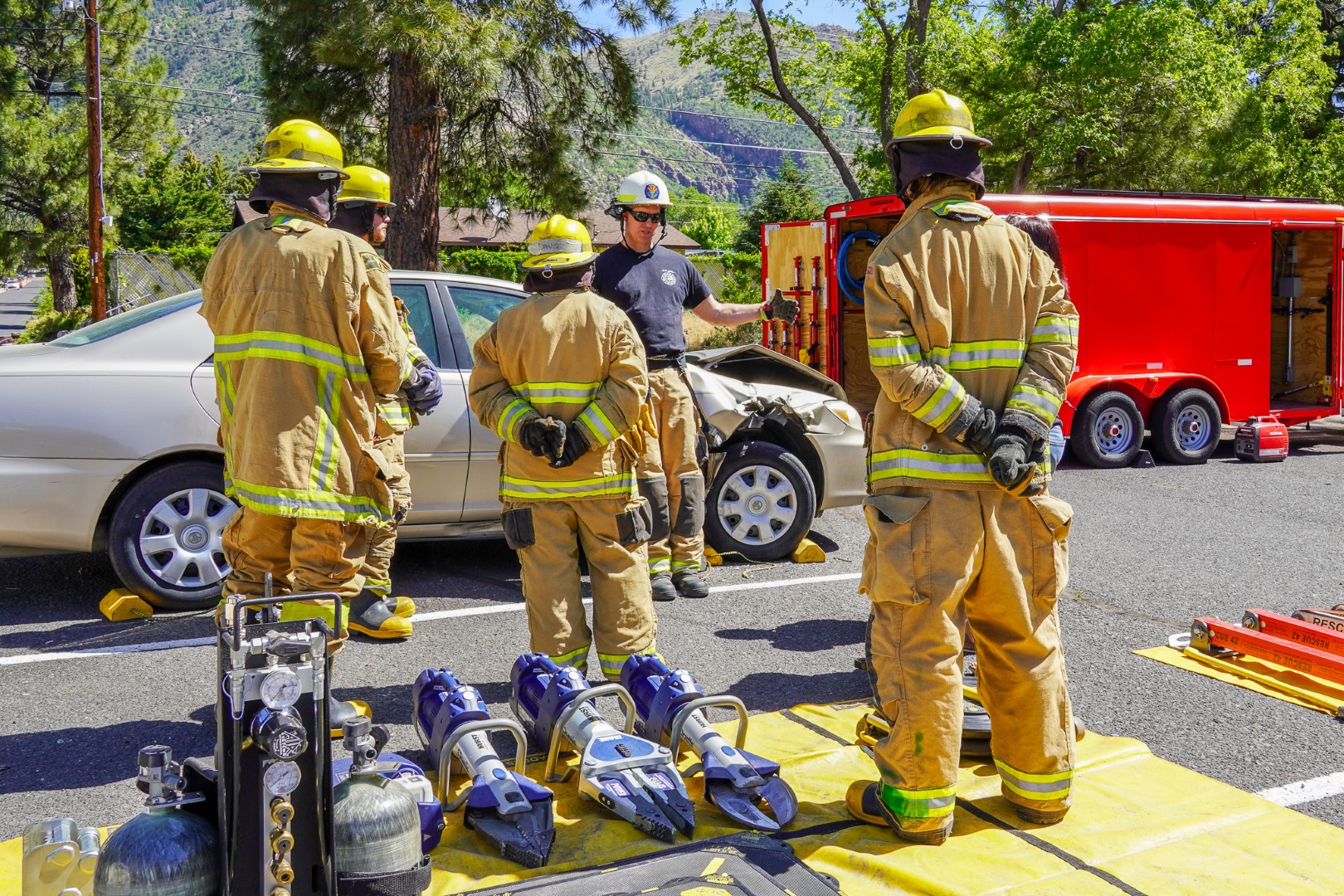
Fire Science students train in firefighting techniques, hazardous materials response, fire behavior, safety protocols, and emergency operations. The specific skills you develop will depend on the credential you choose. Each program page includes a full breakdown of coursework and learning outcomes.

Already Working in Fire Science?
CCC offers credentials designed specifically for career advancement, including the Company Officer and Fire Engineer certificates. These programs are built for professionals ready to move into leadership and specialized operational roles.
[Explore Career Advancement Credentials]
Transfer Options
This degree has limited transferrable options, and may not transfer to other institutions.
Career Outlook
Program Standards & Recognition
- Earn National Registry EMT & IFSAC-accredited Firefighter I & II and HAZMAT certification in only 2 semesters, qualifying you for employment nationwide.
- IFSAC is one of only two national firefighter certifying agencies.
- Train with curriculum that exceeds local, state, and national certification requirements.
- Learn from current and recently retired fire service professionals.
Frequently Asked Questions
- Do I need prior experience to enroll in Fire Science?
No prior experience is required to get started. Most students begin with the Intermediate Certificate and build from there. If you are unsure where to start, an advisor or the Fire Science program coordinator can help you identify the right entry point based on your background and goals.
- Is financial aid available for Fire Science programs?
Yes. All Fire Science certificates and the AAS degree are credit-bearing programs, which means they are eligible for federal financial aid including Pell Grants and student loans. Contact the Financial Aid office to learn more about your options.
- Are Fire Science programs available at all CCC campuses?
Most Fire Science courses are offered in person at the Fourth Street Campus in Flagstaff. Some advanced coursework is available in a hybrid format. Students at the Page Campus should speak with an advisor about availability and options for completing program requirements.
- Do these programs lead to certification or licensure?
Yes. The Fire Science program is accredited through IFSAC, one of only two national firefighter certifying agencies, and prepares you for nationally recognized credentials including Firefighter I and II and Hazardous Materials certification. Specific certification outcomes vary by program. Each program page includes details on the credentials you can earn.
Meet your Faculty:

Next Steps:
- Apply for free
- Find ways to pay for college
- Meet with your Advisor
- Enroll in classes